Most earthquakes are tectonic: plates load faults until rock fails. A smaller but growing category is different. Induced seismicity — and its cousin, triggered seismicity — are earthquakes nudged by human activity. The fault was already stressed. Industry changed the balance just enough for it to slip.
That distinction matters when you watch Tremr’s live monitor. A magnitude 4.5 under Oklahoma or a swarm near a geothermal plant is not the same story as a megathrust under Japan. Same physics of rupture. Different reason the clock ran out today.
This piece is a companion to Why Are There So Many Earthquakes Right Now?, Fault Types Explained, and Why Do Aftershocks Happen? — literacy for when the map lights up inland, shallow, and suspiciously near wells or reservoirs.
Induced vs Triggered vs Natural
Seismologists use careful language:
- Natural (tectonic): plate motion alone brings the fault to failure
- Induced: human activity causes a clear, local rise in earthquake rate — often where little seismicity existed before
- Triggered: a fault already near failure slips earlier because of a human stress change (or sometimes a distant large quake)
In practice the line blurs. What the public needs is simpler: some human operations can raise earthquake rates, and the largest induced events can crack buildings even when they are smaller than famous plate-boundary disasters.
The Main Culprit: Wastewater Injection
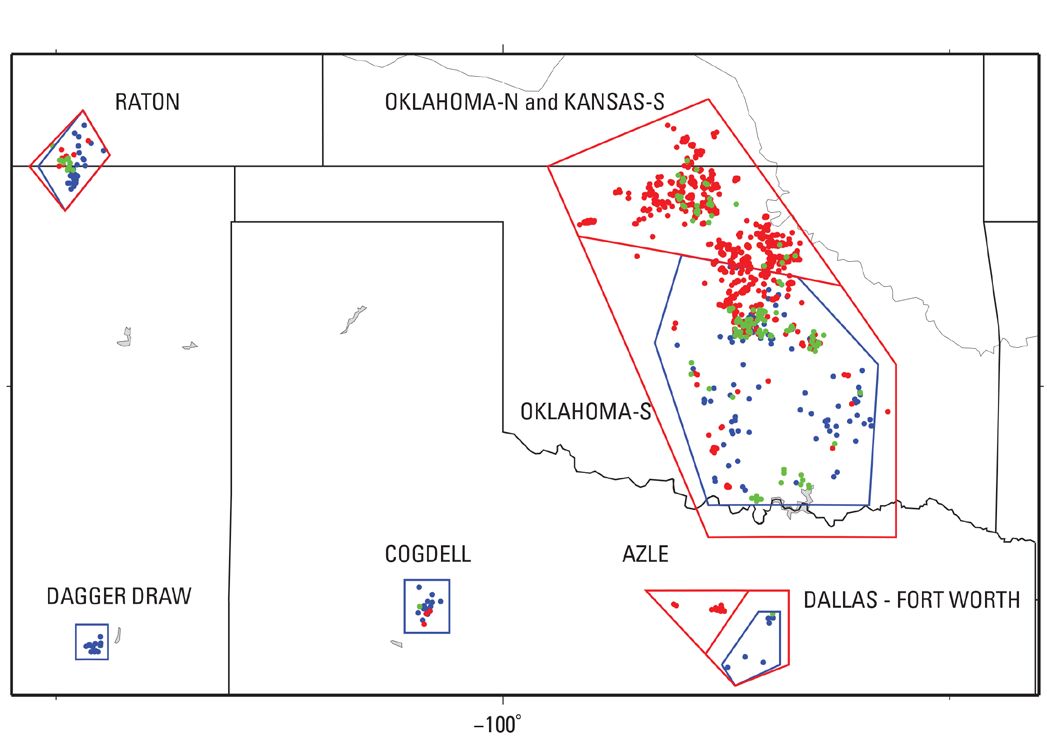
In the central United States, the surge of earthquakes since the late 2000s tracks less with hydraulic fracturing itself and more with deep disposal of wastewater produced by oil and gas operations. Fluids injected into deep wells raise pore pressure in rock. Higher pore pressure reduces the effective stress that holds a fault locked. A fault that was stable for centuries can start failing in small slips — then larger ones.
Oklahoma became the clearest example. Annual earthquake counts that once looked like a quiet midcontinent suddenly rivaled California’s for a stretch of years. When regulators curtailed injection volumes and depths in high-risk zones, rates fell. Cause and effect were not subtle.
Fracking, Geothermal, Mining, Reservoirs
Hydraulic fracturing can produce small, short-lived seismic bursts near the well. Most are tiny. A few regions have seen larger events when fracking intersected critically stressed faults — which is why traffic-light protocols exist: monitor, pause, or stop when magnitudes climb.
Enhanced geothermal systems pump fluid to open fractures in hot rock. Basel (Switzerland) and other projects showed that stimulation can induce felt quakes; modern designs lean harder on real-time seismic monitoring.
Mining and quarry blasts create their own signatures. Seismologists separate blasts from earthquakes with waveform clues — depth, time of day, and network detections. On a global feed, a shallow daytime cluster at a known mine is a different story from a nighttime tectonic mainshock.
Large reservoirs can induce seismicity by loading the crust with water weight and changing pore pressures beneath the dam. The 1967 Koyna earthquake in India remains a classic reservoir-triggered case study. Filling a lake does not invent plate tectonics; it can tip a local fault.
How Large Can Induced Quakes Get?
Most induced events are small. The ones that make news sit in the magnitude 4–5+ range — strong enough to damage unreinforced buildings, scare cities that “never had earthquakes,” and force industry and regulators to rewrite rules overnight.
Upper bounds are debated. Induced seismicity does not create megathrust energy out of nowhere; it taps stress already stored on nearby faults. In a midcontinent setting, that usually caps well below the giants of subduction zones. In a place already laced with active faults, the risk conversation is about whether human pressure advances a damaging slip that nature would have delivered later — or at all.

How to Spot It on a Live Feed
Tremr shows magnitude, depth, place, and map context — not a “human-caused” badge. Still, patterns jump out:
- Shallow + inland + industrial basin — Oklahoma, parts of Texas, Alberta, and similar plays
- Swarms without a clear mainshock-aftershock decay — rates rising for weeks near injection fields (see also earthquake clusters)
- Known geothermal or reservoir projects — check local agency notes when a swarm sits under a plant or dam
- Very shallow depths — induced events are often in the upper crust; pair with Shallow vs Deep
Do not overfit. Plenty of natural midcontinent and intraplate quakes exist. Pattern plus geology plus industry context beats a single yellow dot on the map.
What Regulators Actually Do
Where induced seismicity became undeniable, the playbook has been pragmatic: cut injection rates, ban disposal into the most sensitive formations, require seismic monitoring, and run traffic-light systems that throttle operations when magnitudes exceed thresholds. The goal is not zero earthquakes — the crust never offers that — but fewer damaging ones linked to manageable human pressure.
For readers, the policy lesson is upstream of preparedness: felt shaking in a “non-seismic” town still follows the same intensity rules. Soft soils amplify. Old brick fails. A magnitude 5 that would be a footnote on the San Andreas can be a civic crisis in a city that never adopted earthquake codes. See Magnitude vs Intensity.
What Induced Seismicity Is Not
Not proof that all local quakes are artificial. Correlation needs geology, timing, and injection data — not vibes.
Not the same as earthquake prediction theater. Knowing injection raises rates is not knowing Tuesday’s magnitude. Science moved from prediction theater to probabilistic hazard for tectonic quakes; induced seismicity adds an operational lever humans can actually turn.
Not a reason to ignore plate boundaries. Cascadia, Nankai, and the Ring of Fire still dominate catastrophic risk. Induced seismicity is a different chapter — local, manageable, and increasingly documented.
The Bottom Line
Human activity can advance the clock on stressed faults — especially deep wastewater injection, and sometimes geothermal, mining, fracking, or reservoirs. When the live map lights up shallow and inland near industry, ask the induced-seismicity questions: depth, swarm shape, local geology, and whether agencies are already throttling operations. Magnitude still tells you size. Context tells you whether nature alone wound the spring.